
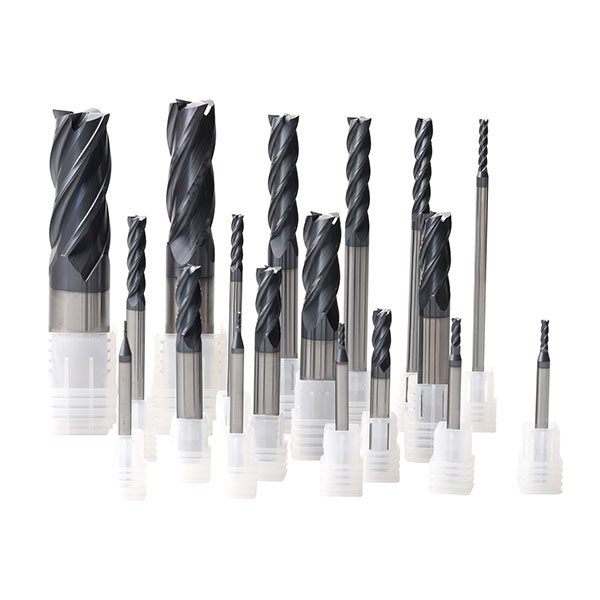
The flute count of flat end mills is closely related to their intended applications and the machining materials. Different flute counts can significantly influence cutting performance, feed rates, and surface finish. Here are the common flute counts along with their characteristics:
- 2 Flutes:
Application: For general milling and fast cutting.
Characteristics: This design allows for better chip removal, especially when machining softer materials like aluminum and plastics. With fewer flutes, the cutting force is relatively low, making it suitable for higher feed rates.
- 3 Flutes:
Application: Suitable for various materials, including aluminum, plastics, and some light alloys.
Characteristics: The three-flute design offers a good balance between cutting strength and chip removal efficiency. It allows for maintaining a reasonable cutting force while increasing feed rates, making it ideal for applications that require higher productivity.
- 4 Flutes:
Application: Commonly used for machining harder materials such as stainless steel and high-strength alloys.
Characteristics: The four-flute configuration increases tool rigidity, resulting in improved surface finish and machining precision. This type of end mill is well-suited for applications that demand fine cutting and high surface quality.
- 5 Flutes and More:
Application: Typically used for finishing operations and high-efficiency cutting.
Characteristics: A higher flute count allows for increased feed rates while providing smoother surface quality. This design is often used in industries where cutting quality is critical, such as mold making and aerospace.
In summary, the selection of flute count for flat end mills should be evaluated based on specific machining needs. Understanding the characteristics of different flute counts can help engineers and operators optimize tool selection, enhancing machining efficiency and product quality.


