
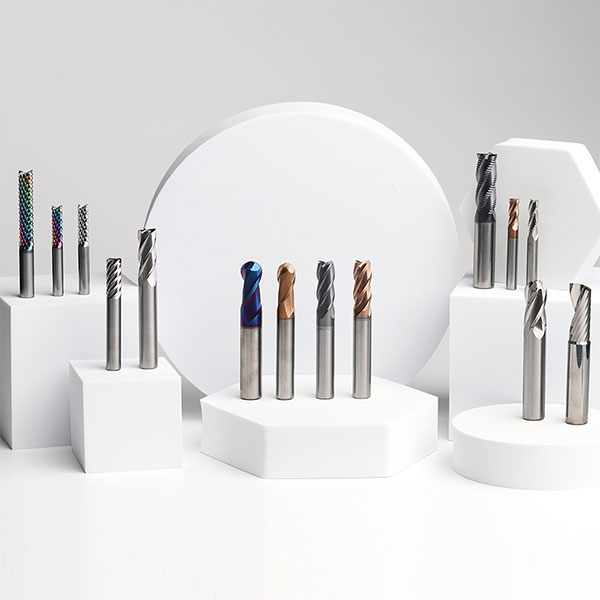
Now, a very important process that allows the carbide end mill to resist wear is the coating. Although solid carbide end mills perform better and last longer in most applications when compared with high-speed steel, heat is not carbide’s friend. In the last decade, the technology to provide more heat- and wear-resistant coatings has promoted longer tool life and increased productivity. There are three major types of coatings that are being used today: TiN (titanium nitride), TiCN (titanium carbon nitride) and the increasingly popular TiAlN (titanium aluminum nitride) or AlTiN (aluminum titanium nitride)-the latter having more aluminum content. Other coatings exist, but they are usually offshoots of these three. All of these coatings provide a benefit, but that benefit can only be realized when dealing with specific applications and materials.
TiN-coated end mills should be run at close to uncoated speeds and feeds. The benefit here is much better wear and lubricity. TiCN is a great coating where slow feeds and speeds are used because of machine constraints. It’s often the coating of choice for high-speed steel end mills, but in carbide you can run it at least 80 percent faster speed against uncoated solid carbide end mills. The only downfall with TiCN is that it’s more prone to failure under extreme heat; hence, it’s use in slower feed and speed applications.
The coatings that are becoming more and more popular are the TiAlN- or AlTiN-coated end mills. They are so effective with dissipating heat into the chips that dry machining is mostly recommended, except when slotting where the chips need to be expelled out of the channel. The aluminum in the coating helps form a gaseous aluminum oxide layer at the cutting edge where temperatures can reach more than 1800xF. This helps protect the carbide substrate from the damaging effects of heat. That’s what makes this coating ideal for high-speed and hard milling, especially in dry cutting. For machining aluminum, brass, plastics and other nonferrous materials it is best to use a noncoated end mill with polished flutes to prevent edge buildup. This is due to the fact that coated end mills don’t allow as sharp an edge needed for these materials.


