
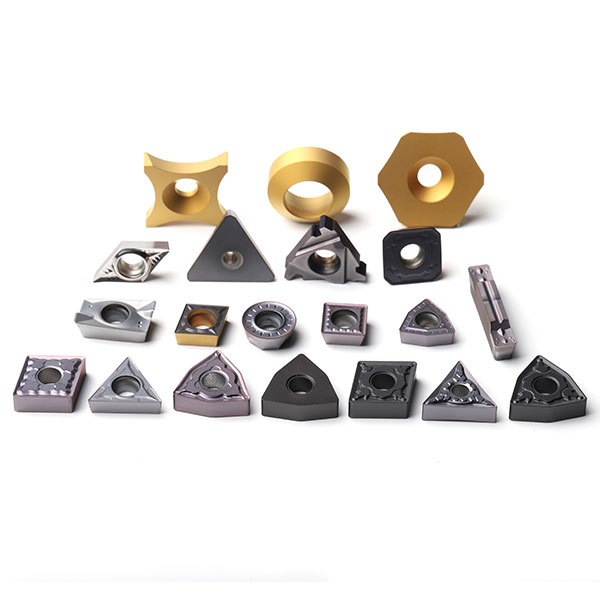
Carbide inserts dominate modern material removal because they combine strong wear resistance, stable cutting performance, and great production economics in real shop conditions.
- Long tool life
Carbide resists wear much better than high-speed steels, so inserts stay sharp longer and reduce downtime. - High hardness at cutting temperatures
Carbide maintains strength when machining heats up, helping you run stable cutting conditions in production. - Excellent wear resistance for tough materials
Carbide inserts handle abrasive chips and harsh workpieces (cast iron, steel, hardened or difficult materials) effectively. - Consistent performance and predictable cutting
Indexable inserts are manufactured to tight tolerances, giving repeatable geometry, chip control, and surface finish. - Strong productivity (better economics per part)
Longer life + faster changes (swap inserts instead of sharpening) improves throughput and lowers total cost of ownership. - A wide range of grades, coatings, and geometries
With coatings like TiN/TiAlN/TiCN/Al₂O₃ and many insert shapes/chipbreakers, carbide can be optimized for roughing, finishing, and different materials.
In short, carbide inserts help manufacturers cut longer, machine more consistently, and reduce downtime—making them a top choice for high-volume material removal.


